Tackling Digital Clutter: Lessons from Creative Browser Design
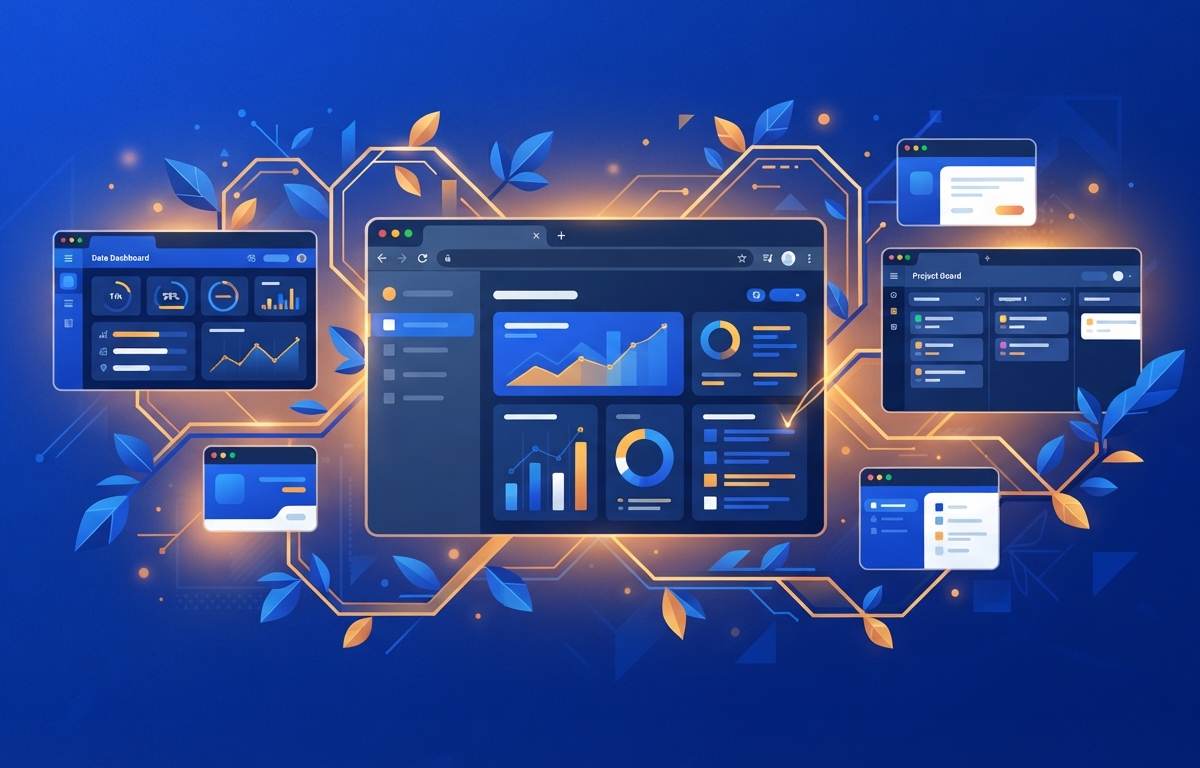
The modern professional workspace has quietly shifted from physical desks to dozens of open browser tabs, representing half-read reports, cloud tools, and pending tasks. A recent creative web experiment called Overgrown tackles this phenomenon by allowing digital foliage to visually conquer abandoned browser tabs over time. Conceived as both an artistic statement and a behavioral nudge, the tool turns tab debt into a living garden, drawing attention to how quickly digital work environments become congested and neglected.
While playful on the surface, the project exposes a profound enterprise reality: digital clutter carries a steep cognitive and operational cost. Globally, knowledge workers lose significant time daily to context switching and navigation friction. Juggling fragmented software-as-a-service dashboards, communication platforms, and internal tools forces employees into reactive multitasking, draining computer memory and employee focus alike. The problem is rarely a lack of technology, but rather an overload of unintegrated applications.
From a software engineering perspective, the experiment demonstrates the rising value of ambient computing and behavioral design. Instead of relying on aggressive notifications or rigid administrative lockouts, future enterprise systems are increasingly leveraging visual cues and automated cleanup routines to guide users toward better digital hygiene. When systems silently accumulate clutter, efficiency plummets, making thoughtful user experience design a fundamental business requirement rather than an aesthetic luxury.
For businesses and government entities across Oman and the GCC pursuing ambitious digital transformation targets, this dynamic holds an immediate operational lesson. As regional enterprises rapidly migrate workflows to cloud systems under frameworks like Oman Vision 2040, internal processes often suffer from tool sprawl. Employees find themselves jumping between separate portals for human resources, procurement, customer relationship management, and analytics, creating digital fatigue and operational bottlenecks across teams.
To capture genuine efficiency gains, business leaders in the Gulf should prioritize unified digital workspaces, custom enterprise dashboards, and workflow automation. Rather than requiring staff to manage disparate browser tabs and disconnected platforms, investing in integrated portals and smart automation eliminates friction, protects employee focus, and safeguards system performance. True digital transformation is not measured by the number of software tools a company adopts, but by how seamlessly those tools enable daily work.