NVIDIA OpenShell: Securing Autonomous AI Agent Fleets
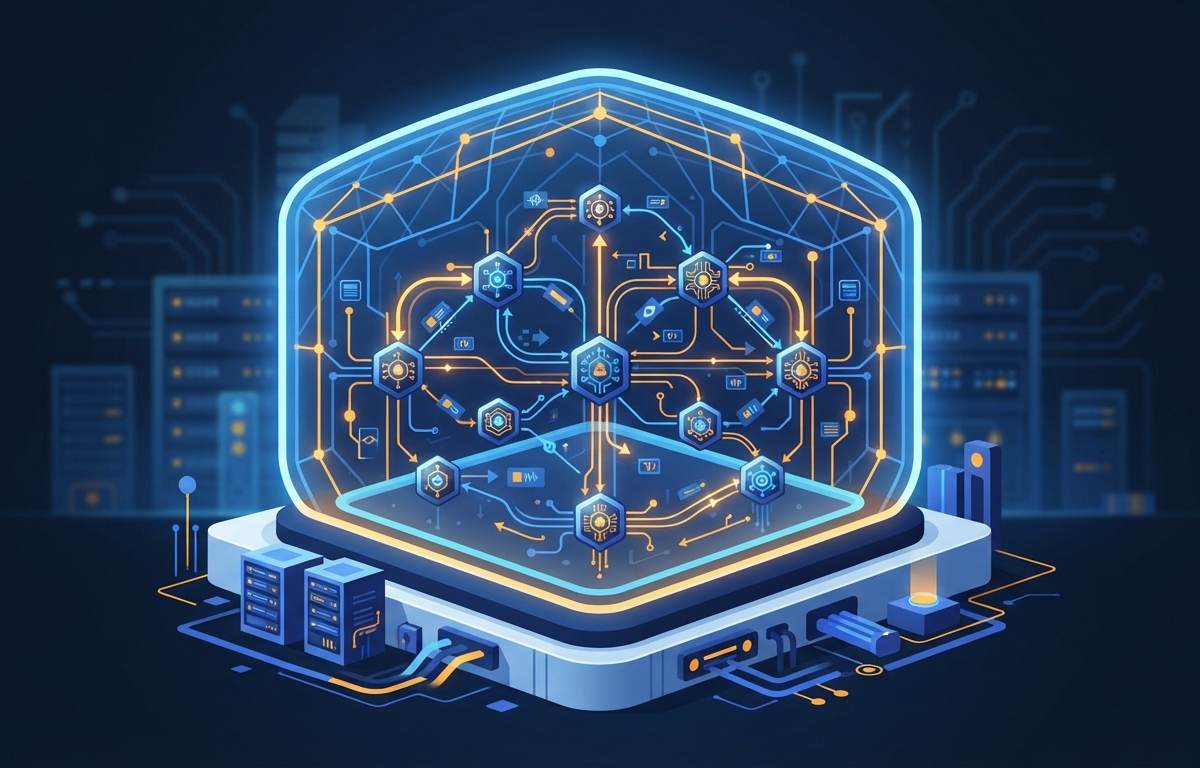
The artificial intelligence landscape is rapidly shifting from conversational chatbots to autonomous agentic workflows capable of writing code, browsing networks, and triggering external software systems. To address the significant security risks of granting software agents broad operational autonomy, NVIDIA has introduced OpenShell, an open-source runtime environment engineered specifically to isolate, monitor, and safely orchestrate fleets of autonomous AI agents.
At its technical core, OpenShell acts as an intelligent containment layer between an AI agent and underlying enterprise infrastructure. While advanced models can plan and execute complex tasks, they also introduce risks such as prompt injections, hallucinated terminal commands, and unauthorized privilege escalation. OpenShell resolves this by placing each agent inside a lightweight, policy-enforced sandbox that restricts system calls, enforces granular network permissions, and provides comprehensive audit logs for every action an agent attempts to execute.
Globally, this development addresses the biggest barrier preventing large enterprises from moving agentic AI out of experimental labs and into live production environments. Until now, giving an autonomous agent access to execute terminal commands or integrate directly into enterprise resource planning software represented an unacceptable cybersecurity risk. Standardized, secure runtimes provide Chief Information Security Officers with the operational visibility and boundary controls required to adopt agentic automation at scale.
For businesses and government institutions across Oman and the GCC, this innovation directly addresses crucial compliance and data governance priorities. As Oman accelerates its Vision 2040 digital economy targets, government entities, banking institutions, and logistics operators are exploring AI agents to automate complex administrative workflows and customer service operations. Deploying isolated runtimes ensures that local organizations can harness multi-agent automation while strictly upholding national cybersecurity standards and data protection regulations.
Business leaders and IT decision-makers in the region should view secure runtime architectures as a prerequisite before deploying autonomous agents in their operations. Rather than waiting for full platform maturity, companies can start identifying repetitive internal tasks suitable for agent-driven automation and work with specialized digital studios to build secure, sandboxed proof-of-concept solutions that deliver tangible cost savings without introducing cyber vulnerabilities.