The Return of Tactile UI: What It Means for Enterprise UX
The open-source development landscape recently witnessed an intriguing shift with the emergence of DEsk, a Wayland desktop environment for Linux built entirely around skeuomorphic design. By deliberately moving away from the prevailing era of austere, hyper-flat minimalism, this project revives tangible visual textures, simulated depth, and physical design metaphors. While seemingly a niche software experiment, it reflects a broader, long-overdue reassessment across the global technology industry regarding how digital interfaces communicate with human beings.
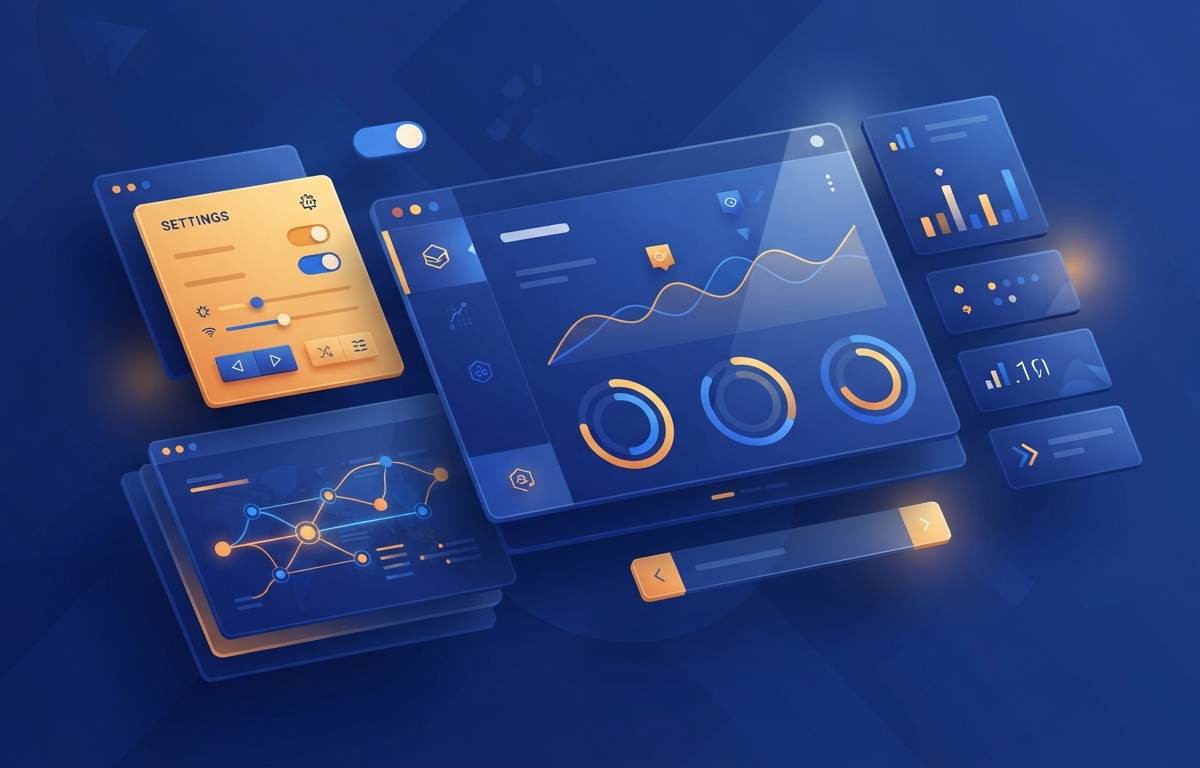
For over a decade, extreme flat design dominated corporate dashboards, mobile applications, and consumer operating systems. While flat aesthetics initially reduced visual clutter and streamlined responsive development, they frequently introduced interactive ambiguity. When interactive buttons, input fields, and status indicators look identical to static text, users experience measurable cognitive friction. Reintroducing subtle affordances—such as soft drop shadows, distinct elevation, and tactile lighting—serves an essential functional purpose by immediately signaling what is clickable, adjustable, or draggable.
Globally, enterprise software vendors are realizing that aesthetics cannot come at the expense of ergonomic speed. In mission-critical environments such as logistics centers, financial analysis floors, and healthcare systems, clarity translates directly into operational velocity and error reduction. The revival of intuitive design cues is not about nostalgic decoration, but about minimizing the mental bandwidth required to operate increasingly complex digital platforms.
This development carries actionable implications for enterprise leaders and government agencies across Oman and the GCC. As regional entities accelerate digital transformation initiatives aligned with visions like Oman 2040, vast capital is allocated to custom software, enterprise resource planning dashboards, and citizen-facing portals. However, user adoption frequently stumbles when systems feature ambiguous, sterile interfaces, driving up employee training expenses and tech support overhead.
Business owners and digital transformation managers in the Gulf must prioritize human-centric affordances over abstract design trends when commissioning custom apps or internal systems. Choosing clarity, distinctive visual hierarchies, and natural tactile feedback ensures faster onboarding, reduces operational bottlenecks, and protects corporate technology investments by delivering software staff actually enjoy using.