Beyond Chatbots: How AI Logic Solves Mission-Critical Software
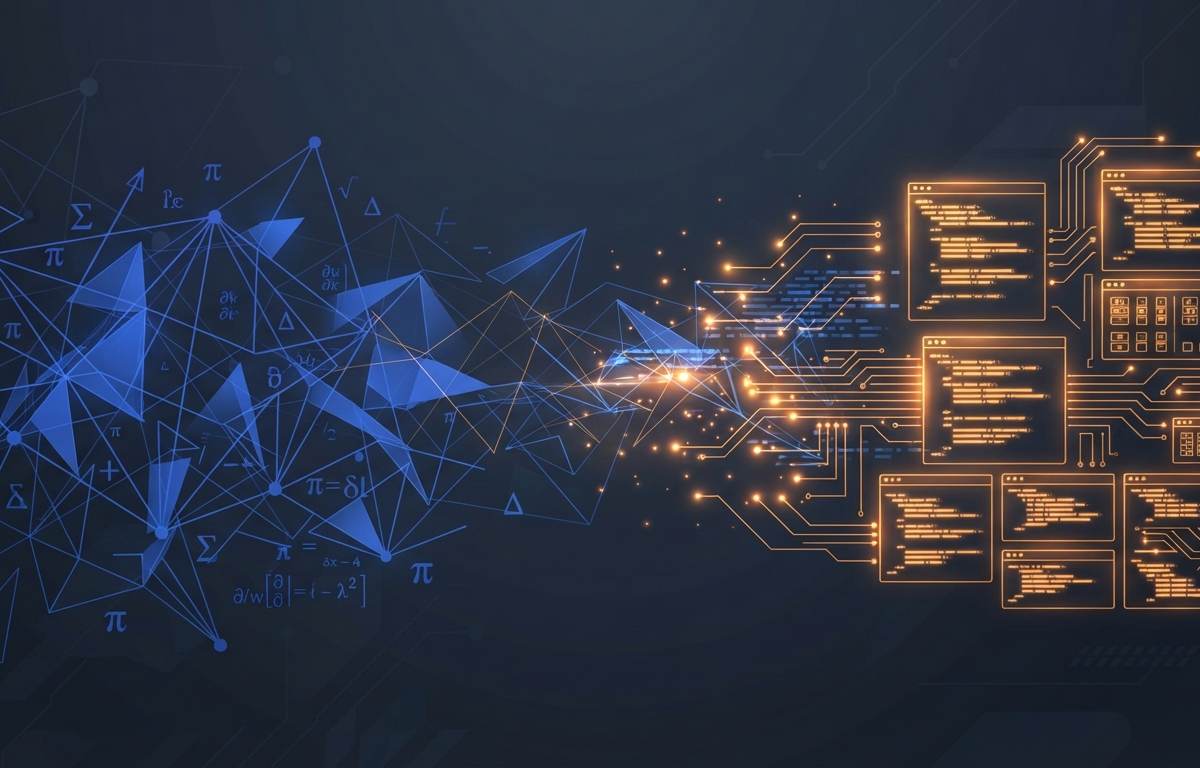
The recent milestone by Anthropic and mathematical researchers to formalize complex mathematical proofs, such as components of Fermat's Last Theorem, marks a defining transition in modern computing. For years, generative artificial intelligence has excelled at creative drafting, summarization, and customer support, but it has notoriously suffered from logical inaccuracies and unpredictable hallucinations. By integrating large language models directly with interactive proof assistants, researchers are teaching AI to operate within strict mathematical boundaries where every statement must be irrefutably proven.
This breakthrough transcends pure academia because the underlying mechanism of formal proof verification is identical to creating defect-free software. In conventional programming, human oversight and automated unit tests catch only a fraction of edge-case bugs. When an AI model is constrained by formal logic systems, it transitions from guessing the next probable word to systematically validating every branch of code, guaranteeing that software executes precisely as intended under every conceivable scenario.
Globally, this evolution addresses the multi-billion-dollar dilemma of software vulnerabilities in mission-critical environments. Industries like aerospace, global payments processing, and smart grid automation can no longer afford the financial and operational fallout of logic errors. With AI-driven formal verification, software engineering shifts from continuous patching after deployment to mathematical certification before a single line goes into production.
For enterprise leaders, government agencies, and tech startups across Oman and the GCC, this development holds profound strategic implications. As Oman accelerates digital transformation initiatives under Vision 2040, national projects spanning digital banking, sovereign cloud services, and automated logistics corridors in Duqm and Sohar demand absolute reliability. High-value transactions and unified e-government platforms cannot tolerate security vulnerabilities or algorithmic errors. Adopting AI-driven verification tools will allow regional financial institutions and tech developers to build custom applications that are mathematically shielded against logic exploits.
The practical takeaway for regional executives is to rethink how digital infrastructure is procured and built. As automated verification matures, business owners should demand that technology partners integrate formal code validation and AI-powered testing into their development pipelines. Moving from standard testing to mathematically verified systems will soon become the competitive benchmark for building customer trust and securing critical infrastructure across the Gulf.