
Stop Using Human Employees as Manual Data Bridges
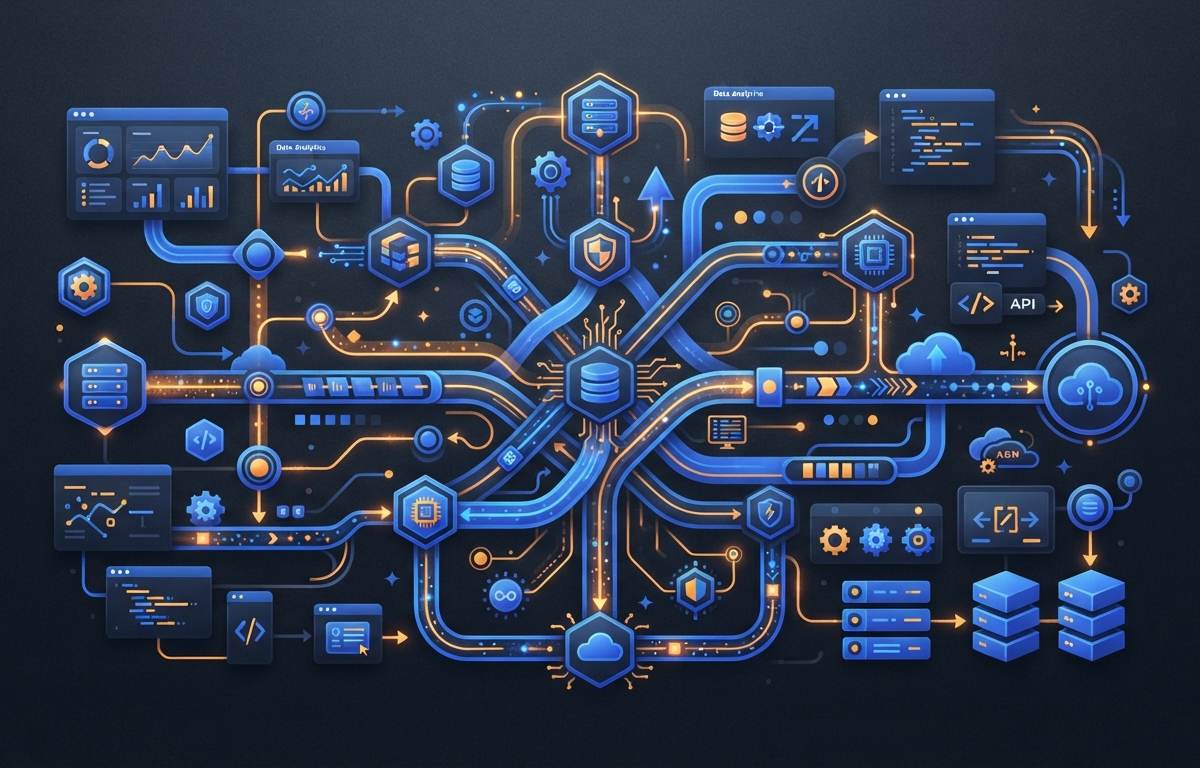
As artificial intelligence and specialized software platforms proliferate across modern organizations, a subtle yet costly inefficiency has emerged: human employees acting as manual conduits between non-integrated digital systems. Staff members frequently find themselves copying data from an AI chatbot into a CRM, re-keying invoice details from emails into accounting software, or manually updating spreadsheets across departments. This phenomenon turns skilled professionals into passive data relays, undermining the core efficiency promises of modern enterprise software.
Globally, organizations invest millions in sophisticated software, yet fail to capture maximum ROI due to fragmented digital architecture. When software tools cannot communicate directly via application programming interfaces (APIs) or custom integrations, valuable human cognitive potential is squandered on repetitive transfer tasks. This operational friction not only slows down workflow velocity but also introduces human error, increases operational overhead, and leads to employee fatigue.
Eliminating manual data bridging requires a strategic shift toward seamless workflow automation and custom software integration. By implementing targeted API workflows, automated backend pipelines, and tailored applications, companies establish direct communication between disparate platforms. When information flows automatically from customer interactions to backend systems without manual intervention, employees can redirect their focus toward high-value decision-making, strategy, and client service.
For businesses and government entities across Oman and the wider Gulf region, eliminating manual data bridging is a vital step toward achieving digital transformation benchmarks under Oman Vision 2040. As GCC enterprises adopt cloud platforms and AI solutions, relying on staff to manually sync data between legacy systems and modern tools creates severe operational bottlenecks. Investing in custom web integrations, tailored enterprise apps, and automated workflows enables local organizations to lower overhead while scaling efficiently in a fast-paced economy.
Decision-makers in the Gulf must evaluate their internal workflows to identify where employees are performing repetitive tasks that software should handle automatically. Partnering with experienced technology studios to build custom digital bridges, intelligent web solutions, and automated data pipelines turns fragmented IT assets into a unified ecosystem. Prioritizing true software integration safeguards workforce productivity and ensures long-term operational resilience.