
Smart TV Snooping Sparks Boardroom Security Concerns
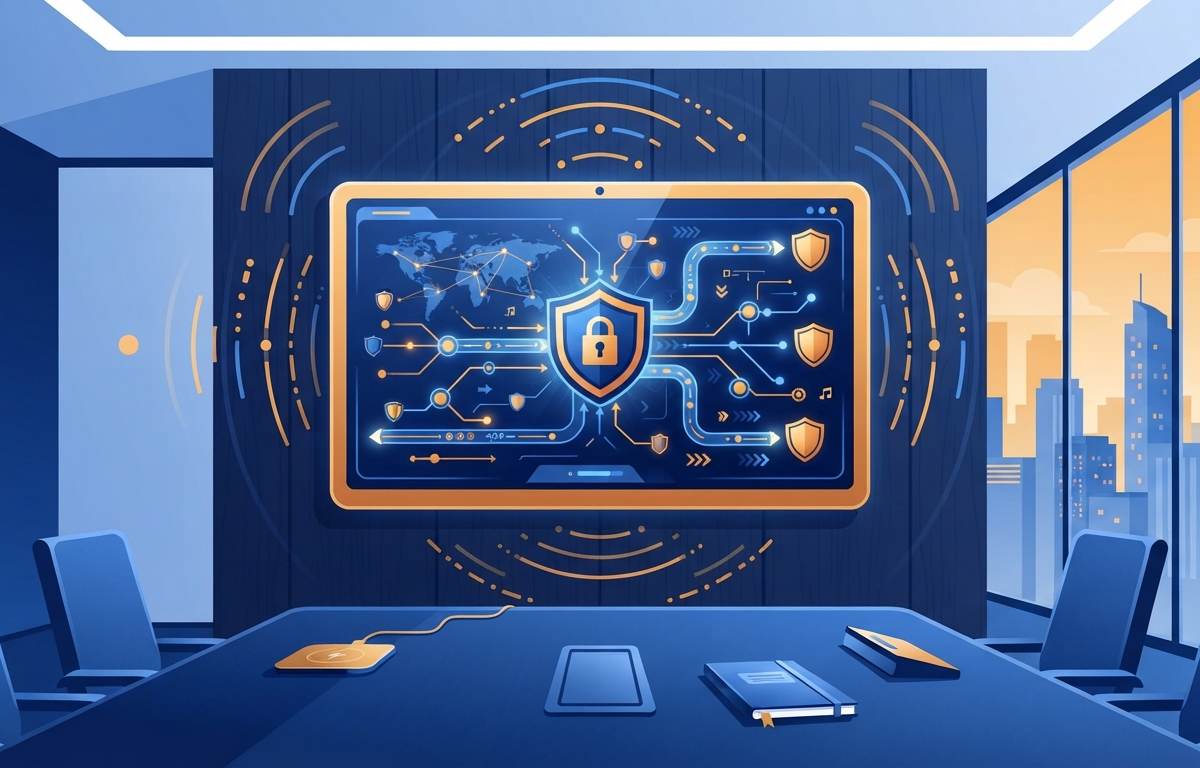
Recent cybersecurity investigations have uncovered that certain consumer smart TVs, including select LG models, continue scanning local network environments and processing ambient audio telemetry even when the screen is powered down. Researchers observed devices transmitting data regarding other connected equipment on the same local subnet, alongside unexpected voice capture triggers. While manufacturers often frame these background processes as rapid-boot mechanisms and voice-recognition responsiveness, the discovery has reignited serious concerns regarding consumer electronics functioning as silent data collectors.
From an enterprise security standpoint, this issue extends far beyond standard household privacy debates. Smart television units have transitioned from living rooms into corporate boardrooms, executive offices, and co-working environments worldwide. When a hardware unit persistently probes local IP addresses and maintains microphone activity in low-power states, it effectively bypasses traditional perimeter defenses, behaving like an unmonitored surveillance node inside the corporate firewall.
The broader implications reveal how vulnerable enterprise networks remain to shadow IoT assets. Organizations invest significantly in securing laptops, firewalls, and cloud databases, yet frequently plug consumer-grade display panels directly into primary corporate networks. A smart display capable of network discovery can inadvertently map internal subnets, catalogue sensitive endpoints, and transmit device signatures to external commercial servers, creating an exploitable attack surface for cyber adversaries.
For businesses and government entities in Oman and across the Gulf, this discovery carries acute operational and legal significance. As regional enterprises modernize under Oman Vision 2040 and align with stringent data governance frameworks, such as the Oman Personal Data Protection Law and National Cybersecurity Center guidelines, unmanaged connected screens present genuine compliance and espionage vulnerabilities. Boardroom discussions covering strategic acquisitions, government partnerships, and proprietary financials risk passive eavesdropping if smart displays reside on unprotected corporate networks.
To neutralize these risks, executive teams and IT managers must enforce strict Zero Trust principles on all connected peripheral hardware. Smart TVs in meeting rooms should be isolated onto dedicated, non-routable virtual local area networks with internet access blocked except when required for verified firmware patches. Organizations should also disable ambient listening, automated device discovery, and voice assistant features at the firmware level, ensuring that corporate strategy remains confined within the boardroom.