Low-Cost Room Robotics: Inside the $800 Open Gripper
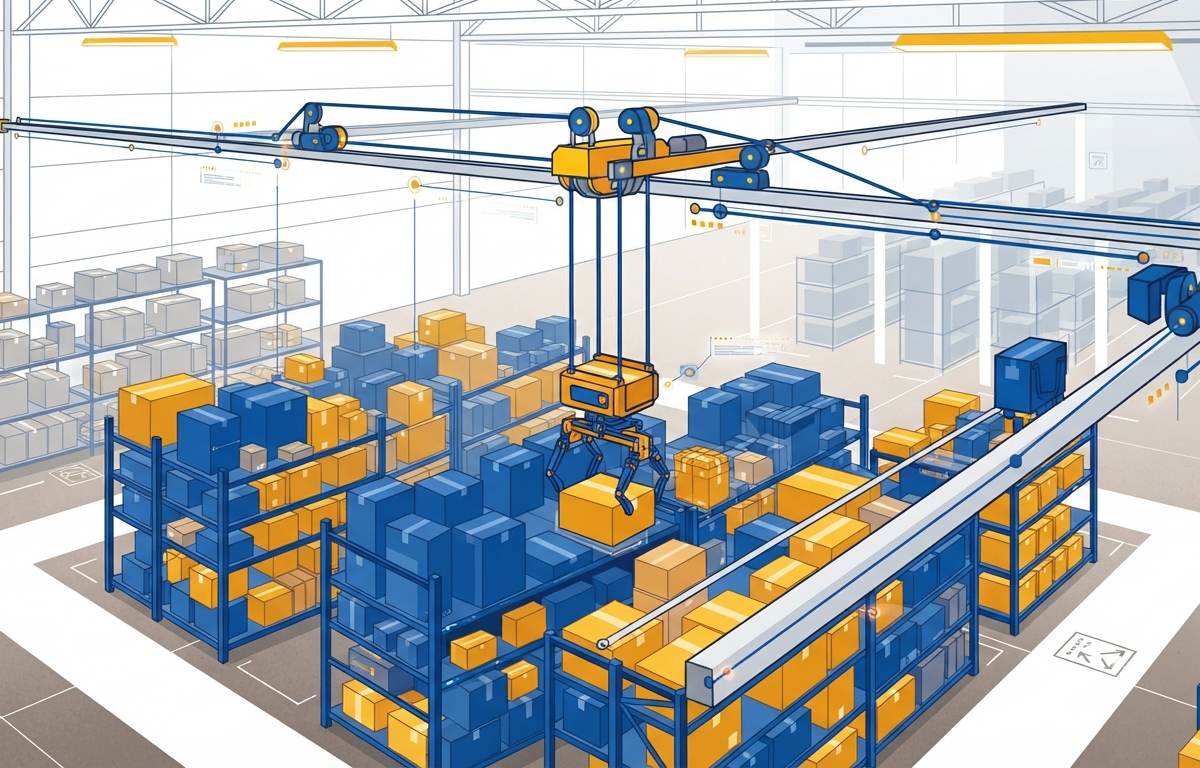
Industrial automation has long been defined by massive capital outlays, where articulating robotic arms and rigid gantry systems require investments running into tens or hundreds of thousands of dollars. The emergence of Stringman, an open-source room-scale cable robot built for roughly eight hundred dollars, highlights an accelerating shift toward democratized hardware. By utilizing high-strength cables suspended across a room to position a central gripper, this architecture proves that expansive workspace manipulation does not necessitate prohibitive engineering budgets.
Cable-driven parallel robotics is not entirely new, but combining open-source software, accessible microcontrollers, and standardized consumer-grade components changes the economic equation. Instead of constructing heavy steel rails or installing multi-axis mechanical joints, four coordinated winches can guide an end-effector smoothly across an entire room. This setup provides three-dimensional coverage suitable for light pick-and-place tasks, automated sorting, and aerial camera positioning without structural disruption.
Globally, this movement signals a major turning point for supply chains and light manufacturing. Small and medium enterprises have historically struggled to adopt physical automation because existing commercial platforms are tailored exclusively for industrial giants with deep balance sheets. When hardware designs become open, modular, and affordable, the core competitive advantage shifts from mechanical assets to the software layer, such as computer vision algorithms, warehouse management integrations, and intelligent task schedulers.
For business leaders across Oman and the wider Gulf, this paradigm shift arrives at an opportune moment. As Oman accelerates its Vision 2040 logistics ambitions through hubs like Khazaen Economic City, Sohar Port, and Salalah, regional retail and e-commerce companies face growing pressure to speed up fulfillment while controlling operational overhead. Rather than waiting for expensive imported turnkey installations, local entrepreneurs and logistics operators can leverage low-cost modular robotics paired with custom internal dashboards and localized inventory software to automate repetitive sorting processes cost-effectively.
The strategic takeaway for GCC decision-makers is clear: modern automation is becoming agile, software-defined, and financially accessible. Companies looking to optimize order fulfillment and storage facilities should evaluate modular, open architectures that integrate seamlessly into their current enterprise workflows, positioning regional businesses at the leading edge of lean, data-driven operations.