Lessons from Sun: Why Enterprise Agility Beats Legacy Tech
Sun Microsystems defined early networked computing, coining the maxim that the network is the computer while pioneering foundational technologies like Java, Solaris, and ZFS. Despite holding unmatched engineering prowess, Sun ultimately collapsed because it misread shifts in market economics. The company banked on selling proprietary, integrated hardware at premium margins, failing to realize that modular architectures, commodity servers, and open-source ecosystems would rapidly outpace monolithic systems in both speed and cost efficiency.
The historical failure of Sun underscores a critical rule in technology strategy: superior engineering cannot save a rigid business model. When enterprise computing pivoted toward decentralized environments and horizontal scaling, Sun remained wedded to high-margin vertical stacks. Clients seeking agility migrated to flexible solutions that allowed them to swap components freely without being trapped inside a single vendor ecosystem.
Today, this dynamic is repeating across cloud infrastructure and enterprise artificial intelligence. Organizations worldwide are aggressively adopting AI agents and cloud systems, yet many make the exact mistake Sun made by investing in rigid, monolithic platforms. Relying on tightly coupled, proprietary enterprise software often introduces hidden operational debt, leaving business leaders with bloated licensing costs and limited ability to adopt newer, faster models as the technology evolves.
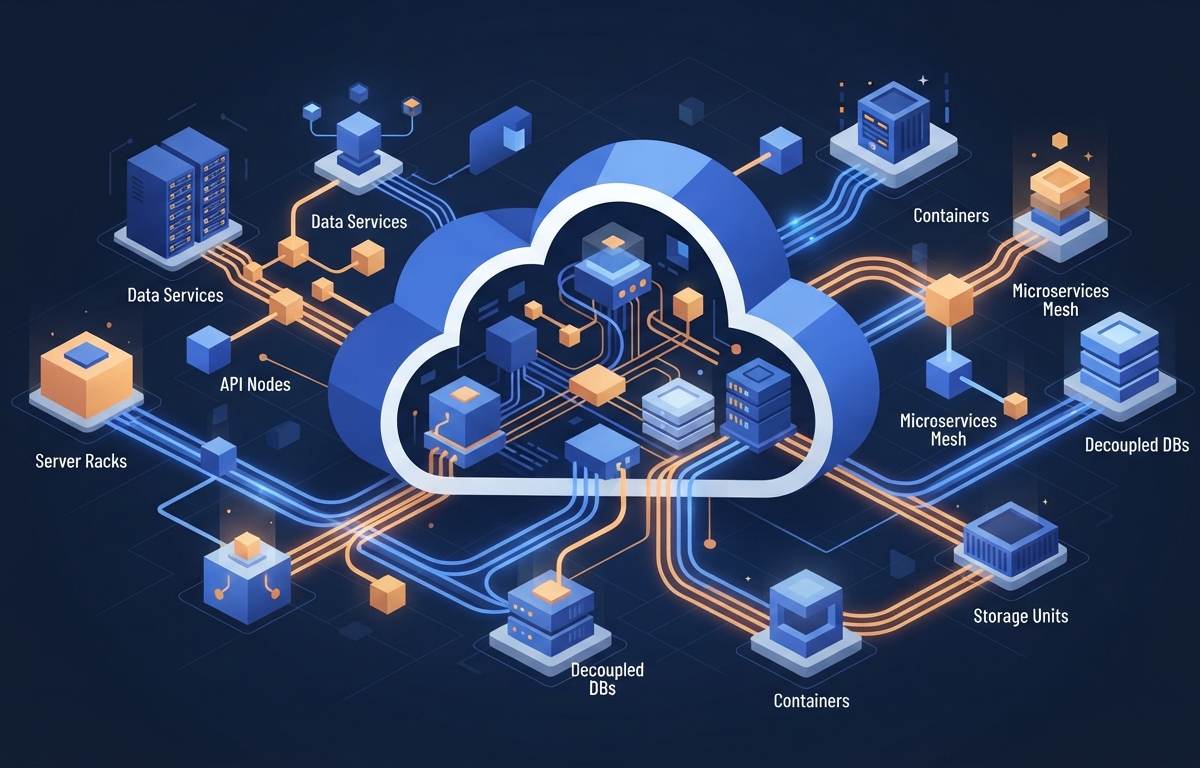
For business leaders and government entities across Oman and the GCC pursuing Vision 2040 transformation programs, the takeaway is clear and actionable. Digital investments must prioritize modularity, open standards, and data independence. Committing public services or mid-market operations to massive, inflexible legacy suites risks technological lock-in and excessive expenditure. Instead, institutions benefit significantly from composable digital architectures, custom lightweight web applications, and modular cloud frameworks that integrate cleanly via modern APIs.
Business owners can safeguard their organizations by viewing software infrastructure as an adaptable asset rather than a permanent fixture. Whether automating internal workflows, launching local e-commerce channels, or deploying specialized AI customer service assistants, enterprise leadership must retain direct ownership of core data and business logic. Building modular systems ensures that Omani enterprises stay nimble, reduce operational overhead, and pivot effortlessly as technological paradigms shift.