Industrial Automation in Volatile and Hazardous Environments
The chemistry of primary explosives such as lead azide demonstrates the unforgiving nature of extreme physical volatility. When microscopic friction, static electricity, or minute pressure differentials can trigger an instantaneous chain reaction, traditional manual handling procedures reach an absolute safety limit. In such environments, human presence ceases to be a safeguard and instead becomes the primary point of failure.
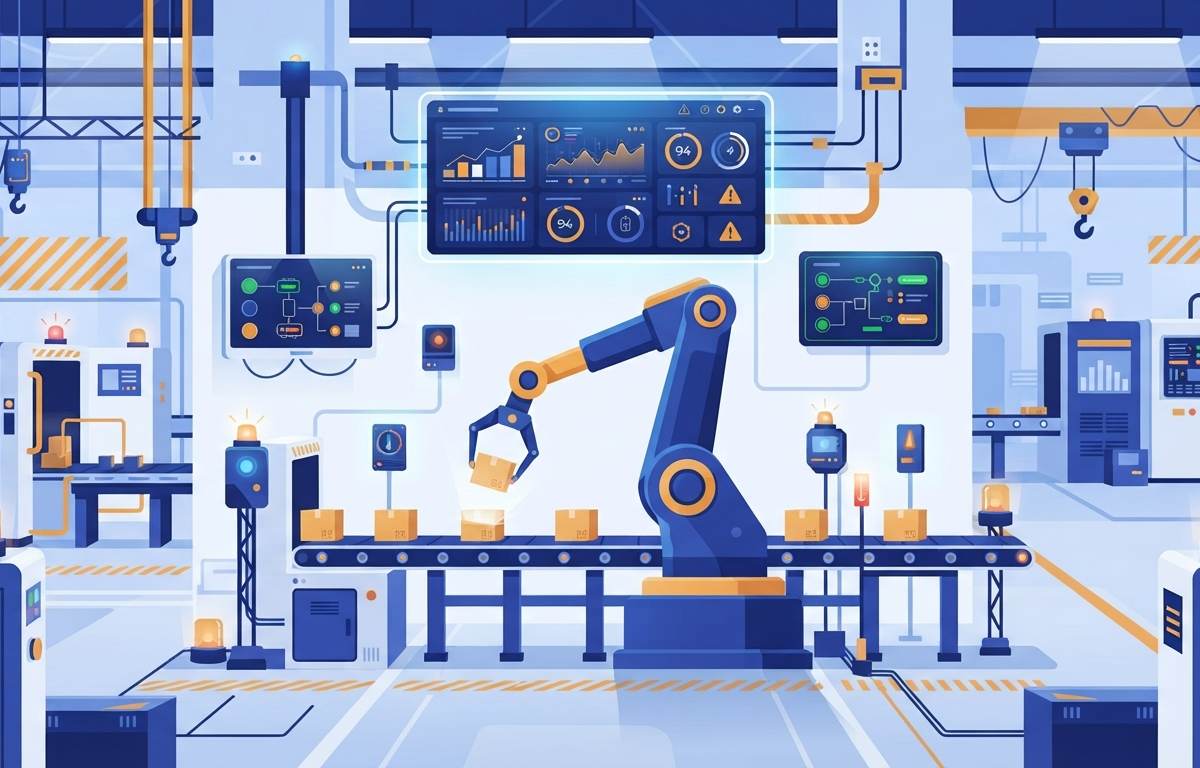
Globally, advanced industrial manufacturing, defense research, and chemical processing are moving rapidly toward total operator isolation in high-hazard zones. Rather than relying on physical protective gear alone, leading facilities deploy remote micromanipulators, automated fluidics, and continuous environmental telemetry. By shifting direct physical interaction to closed-loop digital workflows, organizations eliminate the mechanical and thermal inconsistencies inherent in manual operations.
This principle extends far beyond specialized explosives into broader industrial safety and critical infrastructure. When dealing with hazardous reagents, high-pressure pipelines, or volatile energy storage, modern enterprise systems employ edge computing and industrial Internet of Things sensors. Real-time predictive telemetry tracks micro-vibrations, thermal runaway risks, and gas accumulation milliseconds before human senses could register a deviation, triggering automated containment workflows automatically.
For businesses and industrial authorities across Oman and the GCC, this operational evolution is directly relevant to regional development goals. As major industrial clusters in Duqm, Sohar, and Ras Markaz scale up refining, petrochemical synthesis, and mineral processing under Oman Vision 2040, the transition to automated safety architectures is becoming mandatory. Deploying bespoke telemetry dashboards, centralized emergency shutdown software, and robotic sampling protects valuable human capital while minimizing costly industrial downtime.
Industrial leaders across the Gulf must treat volatile environments not merely as unavoidable operational liabilities, but as software and engineering priorities. By investing in tailored process automation, smart sensor networks, and cloud-connected safety monitoring, regional facilities can safeguard their workforce, protect multi-million-dollar capital investments, and establish global benchmarks for high-risk operational excellence.