Enterprise Cloud Banking: Modernizing Legacy Financial Tech
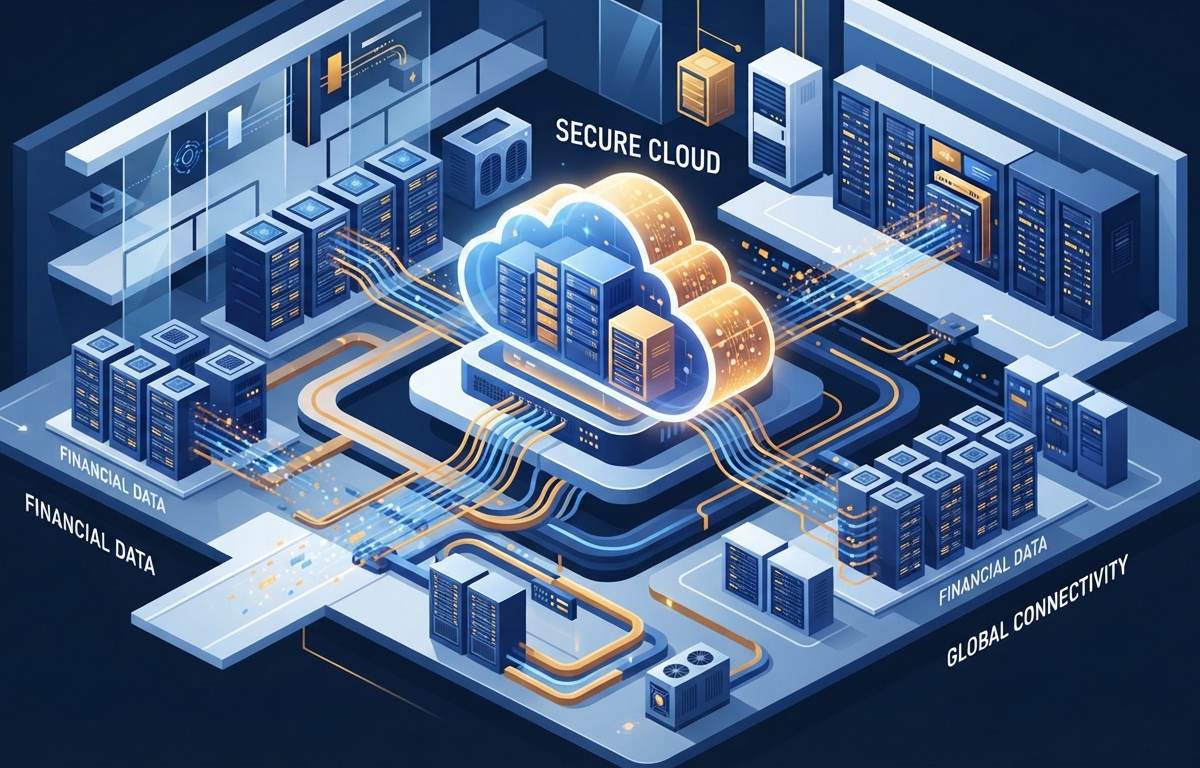
Major international financial institutions are accelerating their architectural shifts away from rigid legacy mainframes toward resilient cloud environments and automated engineering platforms. By opening up an inside view into their core technological modernization, global leaders like Deutsche Bank demonstrate how massive legacy debt can be systematically dismantled without disrupting critical transactional services. This evolution focuses heavily on decoupled microservices, unified data layers, and automated compliance pipelines that allow cross-functional teams to deploy software rapidly and securely.
Globally, this operational pivot reflects a fundamental reality across enterprise IT: digital transformation is no longer about surface-level mobile interfaces, but about engineering deep operational agility. Financial giants are partnering closely with tier-one hyperscalers to run predictive analytics, optimize capital allocation, and embed machine learning directly into everyday risk modeling. The strategic objective is clear: transform the IT department from a slow cost center into an agile software factory capable of responding immediately to shifting market dynamics.
Yet, this transition carries immense technical challenges, especially around regulatory compliance, operational sovereignty, and data protection. Decoupling decades of intertwined code demands strict platform governance, rigorous observability, and automated testing frameworks that ensure regulatory oversight at every step. Organizations that succeed treat developer platforms as internal products, standardizing developer toolkits so engineers spend less time managing infrastructure and more time delivering business value.
For banks, government entities, and large enterprises across Oman and the GCC, these lessons arrive at a pivotal moment. Under frameworks like Oman Vision 2040 and regional open banking regulations, domestic institutions face surging demand for instant digital payments, unified digital wallets, and automated lending. Rather than pursuing risky rip-and-replace strategies, Gulf decision-makers should follow the modular modernization playbook by wrapping legacy core systems in modern API layers, automating routine compliance workflows, and establishing hybrid cloud environments that comply with strict central bank data residency mandates.
Local SMEs and FinTech startups can also extract significant competitive value from this enterprise shift. By collaborating with modernized institutions through robust application programming interfaces, agile ventures can launch contextual financial products, automated invoicing, and intelligent customer service agents faster than ever. Investing in disciplined software architecture, secure cloud foundations, and automated operations is ultimately what separates resilient regional players from those left stranded by technological obsolescence.